How AI Outreach Humanizes Large Campaigns
Neural Networks and the Advancement of Link Vetting
Connect quality assessment has actually moved from a manual list to a high-speed computational process in 2026. Older methods counted on fixed metrics like domain ratings or simple traffic price quotes, which ended up being simple to control. Today, neural networks examine the semantic relationship in between a source page and its target with a level of accuracy that makes traditional metrics look primary. These designs do not just count keywords. They analyze the vector space of the content to determine if a link exists due to the fact that of a genuine editorial connection or a mechanical intent to affect search engine result.
In 2026, the main difficulty for digital managers is no longer finding a high volume of links, but ensuring that each connection survives the examination of deep learning filters. Search algorithms now use repeating neural networks to trace the history of a domain, determining patterns of abnormal development that human beings might miss out on. This change has pressed organizations to concentrate on Asia Virtual Solutions Software as a way to keep presence in a competitive environment. Without this focus, a website dangers being flagged for importance mismatch, which is now a more severe charge than basic link spam.
Measuring Semantic Importance in 2026
The core of contemporary link assessment depends on Transformer-based designs that check out and comprehend websites just like a human would, however at a massive scale. These models evaluate the neighborhood of a link. If a link concerning financial planning appears within a discussion about gardening, the neural network appoints it a low weight, even if the linking site has a high track record. This contextual awareness guarantees that authority is only passed when the topics are realistically aligned. Professionals in the field have kept in mind that the "drift" between the source and target content is now the single essential consider link longevity.

Automation has moved into the vetting stage, where software application predicts the future value of a possible link. SEO NEO SEO NEO Explained helps groups choose which opportunities deserve pursuing before they ever send an outreach email. By simulating how a search engine will likely analyze a link 6 months from now, these tools avoid the acquisition of "rotting" possessions. This predictive capability conserves time and budget plan, permitting a more surgical approach to authority structure. Instead of broad projects, teams now perform highly targeted strikes on domains that possess high topical density.
Behavioral Signals and the Death of Fixed Metrics
One of the most substantial modifications in 2026 is how neural networks incorporate behavioral information into link quality. It is no longer enough for a link to simply exist. Online search engine observe how users communicate with the page containing that link. If users consistently avoid over a link or program indications of frustration when clicking it, the weight of that connection drops. This behavioral layer makes it nearly difficult to use old-school link farms or hidden placements. Links should show up and useful to real people to offer any technical benefit.
Many companies browsing for SEO NEO for Scalable Growth have found that little, niche-specific sites typically offer more worth than big, generic news outlets. A neural network acknowledges that a specialized blog site has a more focused authority in a particular field. This has actually caused a decentralization of the web, where smaller, reliable voices hold more sway than they did 2 years earlier. The automation of this discovery procedure permits brands to discover these "micro-influencers" of the web without the massive manual work previously required.
Predictive Analytics for Sustainable Authority
The speed of these evaluations is possibly the most striking advancement. In previous years, a site may take pleasure in the advantages of a low-grade link for months before a search engine update captured up. In 2026, these updates are consistent and instant. When a new link is indexed, it travels through a number of layers of neural filtering instantly. These layers examine for author credibility, hosting patterns, and even the "sentiment" of the surrounding text. If the link is discovered in a section of text that is purely promotional or lacks a natural flow, its value is moistened in real-time.
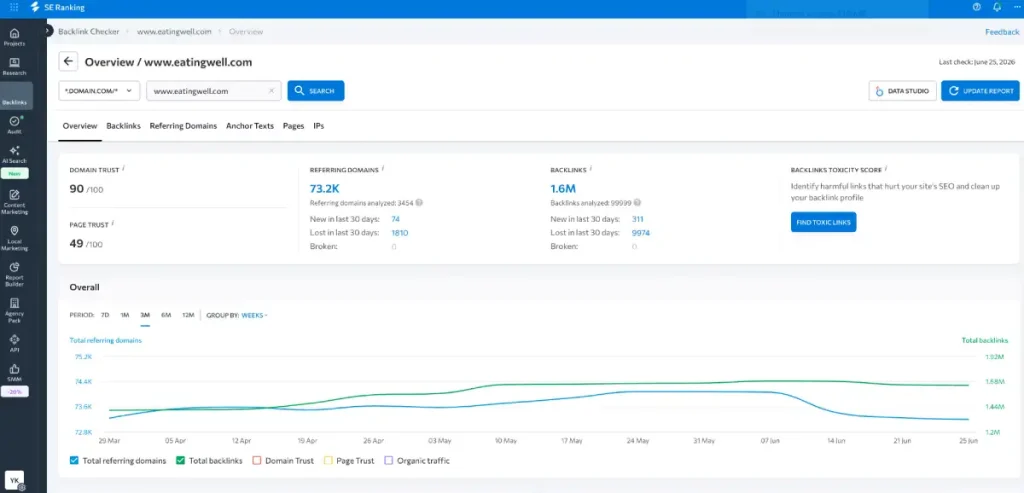
This environment needs a different method to SEO management. Managers now utilize real-time dashboards that show the "health" of their link profile based on these neural filters. These control panels highlight links that are starting to lose importance as the site's own material develops. Due to the fact that the web is fluid, a link that mattered in January might end up being a liability by December if the destination page alters its focus. Continuous tracking by means of automation is the only way to stay ahead of these subtle shifts in topical alignment.
The expense of entry for effective link building has actually increased, however the results are more steady. By 2026, the market has actually primarily moved away from high-risk strategies. Neural networks have brought a level of openness to the web where quality is objectively measured by logic and information rather than subjective opinions. For those who invest in understanding these automated systems, the course to authority is clearer than ever. It is about developing a web of connections that are as intelligent as the algorithms examining them. Success depends upon the capability to combine technical automation with top-level content technique, guaranteeing that every link serves a function for the user and the machine alike.