How SEO Software Examines Real-Time Importance

Accuracy Customization in 2026 Browse Environments
The digital environment of 2026 has actually moved past the age of bulk email blasts and generic templates. Automation in SEO now focuses on depth rather than simply volume. As online search engine have actually enhanced their capability to find low-effort synthetic material, outreach methods had to adapt. Today, successful link acquisition counts on neural networks that can analyze the semantic subtlety of a site before a single outreach message is created. This shift guarantees that every interaction feels made and relevant to the recipient.
Machine knowing models now consume years of content history from possible partners. This permits for the creation of pitches that reference specific arguments made in previous posts or recognize genuine gaps in a site's details. Instead of a basic "I liked your post," AI tools in 2026 produce observations about how a new piece of information may update a specific study published 2 years earlier. This level of information makes it almost difficult for editors to compare an AI-assisted pitch and a manual one. Many groups are discovering success by incorporating Michael Swart into their standard operations to preserve this high level of quality without sacrificing speed.
The speed of these systems is not almost sending more mail. It is about processing huge amounts of information to find the "ideal" moment for contact. Modern outreach platforms keep track of real-time news cycles and social shifts to suggest when a certain subject is most likely to get traction. This predictive capability allows SEO specialists to secure mentions before a topic ends up being extremely saturated.
Scalable Outreach via Big Action Designs
The introduction of Big Action Models (LAMs) has actually changed how link contractors handle their everyday tasks. These systems do not just compose text; they carry out actions across different software application platforms. A LAM can recognize a possibility, verify their contact details through a secure database, examine their social networks activity for recent interests, and after that prepare a highly particular proposal. This frees up human experts to concentrate on the 5% of high-value partnerships that require an individual touch or a physical conference.
Information from the very first half of 2026 shows that hyper-personalized AI outreach has a 400% higher success rate compared to the automatic sequences utilized just a couple of years ago. This success originates from the ability to match the "voice" of the sender to the "voice" of the recipient. If an editor prefers data-heavy, academic pitches, the AI changes its tone appropriately. If the recipient is known for a more casual, conversational style, the system mimics that nuance perfectly. Because of these advances, more brand names are turning to Asia Virtual Solutions Automated Link Building to handle their most important acquisition goals.
Additionally, these tools now handle the follow-up process with extreme level of sensitivity. They track whether an e-mail was opened, how long the recipient invested reading it, and if they clicked any connected links. If an editor seems interested however hasn't responded, the AI can wait for a natural "trigger" occasion-- such as the editor publishing a new post-- to send a follow-up that recommendations the brand-new work. This makes the interaction seem like a continuous professional relationship rather than a cold sales funnel.
Integrating AI with Modern SEO Management
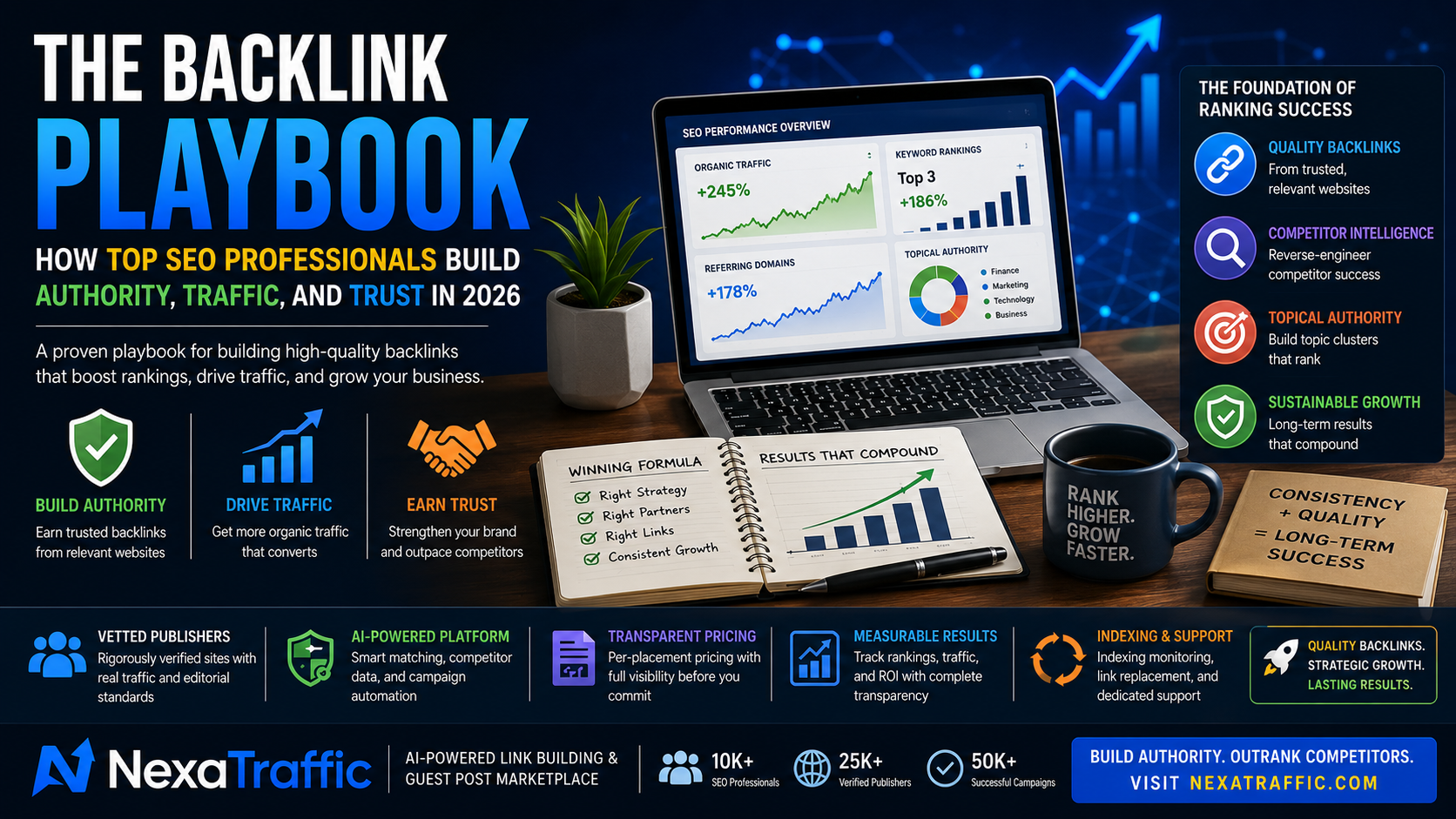
Reliable link building does not exist in a vacuum. It must be coupled with technical excellence and on-page optimization. In 2026, AI-driven outreach tools are frequently part of a bigger suite used for search engine optimization. These systems analyze the existing "link gap" between a website and its leading three rivals in real-time. They don't just discover any links; they find the particular links that will move the needle for particular keyword clusters.
Topical authority has actually ended up being the main metric for 2026, replacing older, more quickly controlled scores. AI systems draw up the "subject clusters" of a target website and make sure that every link acquired reinforces that specific authority. If a site is attempting to rank for a specific technical specific niche, the AI prevents basic news websites in favor of smaller sized, high-authority trade publications. This surgical technique to digital growth guarantees that traffic isn't simply high in volume, however high in intent.
Using these tools also reaches internal management. Large groups use AI to prevent "overlap" where two various departments might inadvertently pitch the exact same editor. The system acts as a central brain, collaborating outreach across international areas and guaranteeing a unified brand name voice. The need for Michael Swart for Cloud Tasks has actually increased significantly as companies realize that manual coordination is no longer feasible at scale.
Technical Barriers and the Human Aspect
In spite of the high levels of automation, the role of the human SEO specialist has actually ended up being more specific. People are now the "managers" of the AI's reasoning. They set the ethical guardrails and the imaginative instructions. In 2026, online search engine use their own AI "gatekeepers" created to ferret out automated patterns. This has actually developed a technological arms race. SEO professionals need to continuously tweak the underlying triggers and data sources to ensure the outreach remains authentic.
Confirmation is another location where human beings stay important. While an AI can find a contact, a human must still vet the most prominent publications to ensure there are no surprise disputes of interest or recent modifications in editorial policy that a machine may miss. The most successful methods in 2026 use a 90/10 split: 90% of the heavy lifting is done by AI, while the last 10% of polish and top-level technique is supplied by experienced specialists.
Ethical factors to consider likewise play a larger function than in previous years. With the 2026 updates to digital personal privacy laws, AI outreach tools need to be set to appreciate "do not get in touch with" registries and information sovereignty rules automatically. Modern software now consists of "privacy-first" modules that scrub personal data while still enabling for the contextual significance required for an excellent pitch. This balance between personal privacy and personalization is the hallmark of the current period.
Future-Proofing Link Building Methods
As we move deeper into 2026, the meaning of a "link" is likewise expanding. AI-driven outreach now consists of securing points out in AI-generated search summaries and voice assistant recommendations. The objective is no longer just a blue clickable link on a page, but a presence within the datasets that the next generation of online search engine use to provide responses. This requires a much broader view of online visibility.
- Focus on semantic significance instead of domain metrics.
- Use AI to determine "content spaces" in prospect sites before pitching.
- Coordinate outreach efforts through a central AI management system.
- Preserve a human-in-the-loop for high-value editorial relationships.
- Display real-time data to time pitches with trending subjects.
The shift towards AI-driven outreach represents a relocation towards a more intelligent, less intrusive kind of marketing. By using data to ensure that every pitch supplies worth to the recipient, the market is moving far from the "numbers game" of the past. In 2026, the most successful SEO campaigns are those that utilize technology to be more human, not less. The focus remains on constructing real connections, even if the initial stimulate of that connection was recommended by an algorithm.