The Future of Scalable Server Technology Beyond
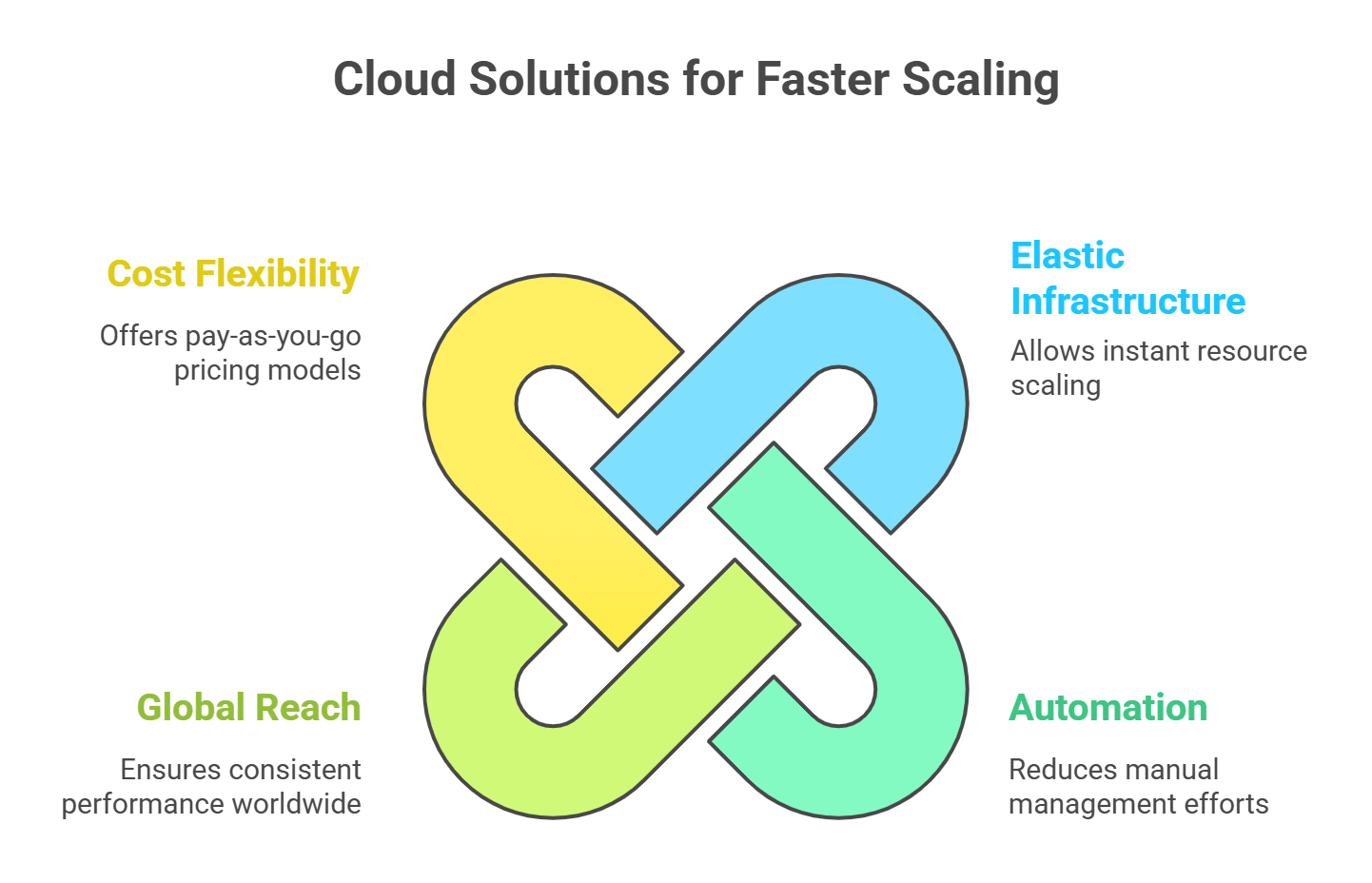
A scalable system can help keep your application running throughout peak times and not end up losing your cash or damaging your track record. If you currently have an application in location, revamping that system can be a difficult procedure that might need code modifications, software updates, and a lot of monitoring. The system goes live and is utilized by genuine users.
Expert Analyses of 2026 Cloud VPS Services
Scaling vertically in the cloud is possible for whatever from EC2 circumstances to RDS databases. Large companies usually prefer horizontal scaling, however they likewise take advantage of vertical scaling by including really effective machines when scaling horizontally. Based on your typical need curve during the day or specific durations of time, you can scale out to, for example, 5instances from 5 pm to 10 pm and then back into two instances from 10 pm to 7 am, then back out to 5 circumstances at 5 pm.
(likewise understood as autoscaling )is when your compute, database, and storage resources scale instantly based upon predefined guidelines. For instance, when metrics like CPU, memory, and network usage rates exceed or below a certain threshold, you can scale up, down, out, or in. The essential advantage of autoscaling is that your application is constantly readily available and has adequate resources provisioned to prevent performance issues or outageswithout spending for much more resources than you are really utilizing. The business can undertake a Discovery Phase, that fits a particular company case. Infrastructure professionals require to have a high level of. Our expertise in cloud computing consists of on-premise-to-cloud migration, cloud-to-cloud migration along with multicloud and hybrid cloud management; We use expert DevOps contracting out services, including Cloud adoption( architecture, migration, optimization), building and.
streamlining CI/CD procedures, security problems detection/prevention( DDOS & invasion), firewall-as-a-service, and more; N-iX is a qualified AWS partner, a Microsoft gold licensed partner, an Opentext Solutions silver partner, and a SAP partner; N-iX is recognized as a trusted vendor by IAOP, GSA, Inc. To optimize cloud scalability, design modular and stateless applications, utilize auto-scaling tools with load balancing, and screen resources to refine scaling policies over time. Managed services and containerization typically make scaling more dependableand easier to manage. Facilities scalability is no longer a high-end it's the architectural foundation that separates services that make it through development from those that collapse under it. This guide covers everything from basic scaling ideas to modern-day auto-scaling patterns, hybrid methods, and real-world decision frameworks utilized by engineering teams at scale. is the capability of an IT system to handle increasing workloads by including resources without needing a basic redesign. Scalability is often confused with associated ideas. Understanding the distinctions matters for architectural decision-making: ConceptDefinitionKey DifferenceScalabilityAbility to deal with growing workload by including resourcesManual or planned expansionElasticityAutomatic, real-timescaling up and down based on demandDynamic, reactive to load changesAvailabilitySystem uptime and ease of access under regular and abnormal conditionsReliability focus, not capacityPerformanceSpeed and effectiveness of a particular work at an offered momentMeasured now, not under future loadResilienceAbility to recuperate from failures quicklyPost-failure healing, not capability growthWhat Is Infrastructure Scalability? According to this type, vertical and horizontal scaling are differentiated. Data builds up, systems end up being more complicated, and technical debt substances making vital regardless of company growth trajectory. 20 Hardware expense decrease possible with horizontal scaling vs. single high-end server 99.99%Uptime attainable with dispersed horizontal architecture and proper fault tolerance 4065%Typical infrastructure expense decrease from auto-scaling and rightsizing likewise called scaling up implies increasing the capacity of a single existing server: adding more CPU cores, RAM, much faster storage, or a more powerful GPU. Before Standard Server 4 vCPU/ 16 GB After High-End Server 32 vCPU/ 256 GB Applications don't need to be revamped for dispersed execution. The upgrade is transparent at the software level. A single server environment is easier to handle, keep an eye on, and debug than a dispersed cluster of nodes. Groups experienced in single-server environments can scale up without brand-new infrastructure tooling or orchestration abilities. Adding RAM or CPU cores takes impact upon reboot no migration, reconfiguration, or code release needed. Every server has a physical optimum. Eventually there is no bigger circumstances to upgrade to, requiring a disruptive migration. No horizontal redundancy means downtime equates to total outage. The highest-spec servers command huge rate premiums. The cost-per-unit-of-compute increases dramatically as you move up the hardware tier. Physical or hypervisor-level resource additions typically require an upkeep window, even if brief. Numerous groups select vertical scaling as the default response to efficiency issues since it feels easier. Vertical scaling delivers one of the most worth in specific situations. It is not inherently inferior to horizontal scaling for the right workload, it is specifically appropriate: Scale Up Applications with deep internal state dependences or a tightly paired codebase that can not be easily dispersed throughout nodes. Scale Up Latency-sensitive systems where microseconds matter and inter-node network latency would breach SLAs. Scale Up Redis, Memcached, or in-memory OLAP databases benefit immensely from big RAM setups. Adding RAM scales capability linearly and instantly. Scale Up Applications with stable, foreseeable load that will not go beyond known limits within the facilities lifecycle. Simpler and cheaper than dispersed overhead. Called scaling out indicates adding more servers(nodes )to distribute the workload.