Why Automated Building Outpaces Conventional Approaches
Precision Customization in 2026 Browse Environments
The digital environment of 2026 has moved past the era of bulk email blasts and generic templates. Automation in SEO now focuses on depth rather than just volume. As online search engine have actually enhanced their ability to spot low-effort artificial material, outreach techniques had to adjust. Today, effective link acquisition depends on neural networks that can analyze the semantic nuance of a website before a single outreach message is produced. This shift makes sure that every interaction feels earned and appropriate to the recipient.
Artificial intelligence designs now ingest years of content history from possible partners. This enables the production of pitches that reference particular arguments made in previous articles or identify genuine spaces in a website's info. Rather of a basic "I liked your post," AI tools in 2026 create observations about how a new piece of data may update a particular research study published two years back. This level of information makes it nearly difficult for editors to distinguish between an AI-assisted pitch and a manual one. Lots of groups are finding success by incorporating Asia Virtual Solutions AI into their basic operations to maintain this high level of quality without sacrificing speed.
The speed of these systems is not just about sending more mail. It is about processing huge quantities of information to find the "perfect" minute for contact. Modern outreach platforms keep track of real-time news cycles and social shifts to recommend when a certain subject is most likely to gain traction. This predictive capability allows SEO professionals to protect mentions before a subject becomes overly saturated.
Scalable Outreach via Big Action Models
The intro of Big Action Models (LAMs) has actually changed how link contractors manage their day-to-day jobs. These systems do not simply compose text; they carry out actions across various software platforms. A LAM can determine a prospect, verify their contact information through a safe and secure database, check their social media activity for recent interests, and then draft a highly particular proposition. This releases up human professionals to concentrate on the 5% of high-value partnerships that need an individual touch or a physical meeting.
Data from the first half of 2026 shows that hyper-personalized AI outreach has a 400% greater success rate compared to the automatic series utilized simply a few years back. This success comes from the ability to match the "voice" of the sender to the "voice" of the recipient. If an editor chooses data-heavy, scholastic pitches, the AI changes its tone accordingly. If the recipient is known for a more casual, conversational style, the system simulates that subtlety perfectly. Since of these advances, more brand names are turning to Asia Virtual Solutions SEO NEO Results to manage their most important acquisition goals.
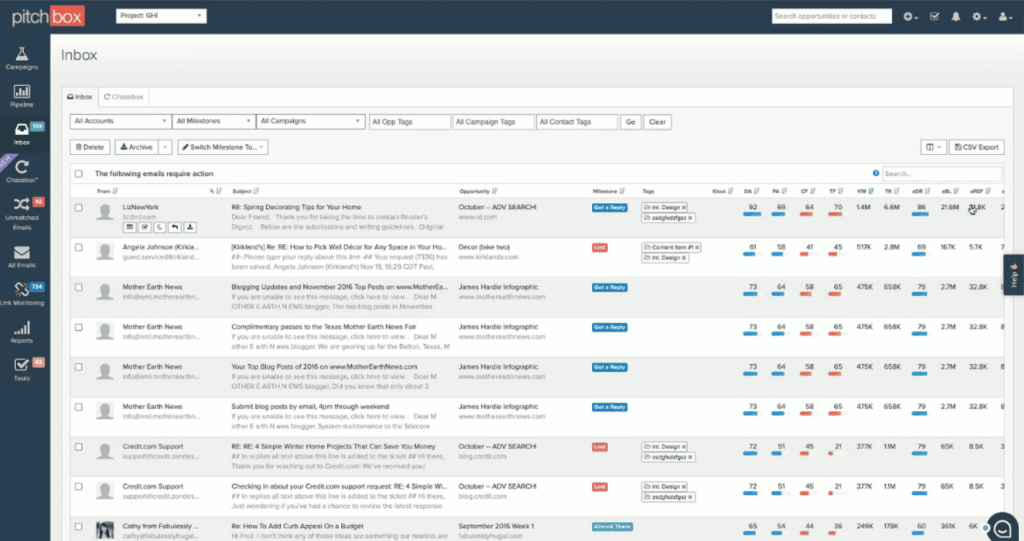
These tools now deal with the follow-up procedure with extreme sensitivity. They track whether an email was opened, the length of time the recipient spent reading it, and if they clicked any attached links. If an editor appears interested however hasn't responded, the AI can wait on a natural "trigger" occasion-- such as the editor publishing a brand-new short article-- to send a follow-up that referrals the new work. This makes the interaction seem like a continuous expert relationship rather than a cold sales funnel.
Incorporating AI with Modern SEO Management
Effective link building does not exist in a vacuum. It needs to be coupled with technical excellence and on-page optimization. In 2026, AI-driven outreach tools are typically part of a larger suite utilized for search engine optimization. These systems evaluate the present "link space" in between a website and its leading 3 rivals in real-time. They do not just find any links; they discover the specific links that will move the needle for specific keyword clusters.
Topical authority has actually ended up being the main metric for 2026, replacing older, more quickly manipulated ratings. AI systems map out the "subject clusters" of a target site and make sure that every link obtained strengthens that specific authority. If a site is trying to rank for a particular technical specific niche, the AI prevents general news websites in favor of smaller, high-authority trade publications. This surgical method to digital growth guarantees that traffic isn't just high in volume, but high in intent.
Making use of these tools likewise encompasses internal management. Big groups utilize AI to prevent "overlap" where two different departments might mistakenly pitch the very same editor. The system functions as a main brain, collaborating outreach across international regions and ensuring a unified brand voice. The need for Asia Virtual Solutions for Organic Traffic has actually increased substantially as business realize that manual coordination is no longer practical at scale.
Technical Barriers and the Human Element
Regardless of the high levels of automation, the role of the human SEO expert has actually become more customized. Humans are now the "curators" of the AI's reasoning. They set the ethical guardrails and the creative direction. In 2026, search engines use their own AI "gatekeepers" developed to ferret out automatic patterns. This has actually developed a technological arms race. SEO experts should continuously fine-tune the underlying prompts and information sources to make sure the outreach remains genuine.
Verification is another location where humans remain essential. While an AI can discover a contact, a human should still vet the most distinguished publications to make sure there are no covert disputes of interest or current modifications in editorial policy that a maker may miss. The most successful methods in 2026 usage a 90/10 split: 90% of the heavy lifting is done by AI, while the final 10% of polish and top-level method is provided by skilled professionals.
Ethical considerations likewise play a bigger function than in previous years. With the 2026 updates to digital privacy laws, AI outreach tools must be programmed to appreciate "do not contact" computer registries and data sovereignty rules instantly. Modern software application now consists of "privacy-first" modules that scrub individual data while still permitting for the contextual importance required for a good pitch. This balance in between personal privacy and personalization is the hallmark of the current period.
Future-Proofing Link Building Methods
As we move deeper into 2026, the meaning of a "link" is likewise broadening. AI-driven outreach now includes protecting mentions in AI-generated search summaries and voice assistant suggestions. The objective is no longer simply a blue clickable link on a page, but an existence within the datasets that the next generation of search engines utilize to provide responses. This needs a much more comprehensive view of online visibility.
- Concentrate on semantic significance rather than domain metrics.
- Usage AI to recognize "content spaces" in possibility sites before pitching.
- Coordinate outreach efforts through a main AI management system.
- Maintain a human-in-the-loop for high-value editorial relationships.
- Display real-time information to time pitches with trending subjects.
The shift toward AI-driven outreach represents a relocation toward a more intelligent, less invasive form of marketing. By utilizing data to make sure that every pitch supplies value to the recipient, the market is moving away from the "numbers game" of the past. In 2026, the most effective SEO projects are those that use innovation to be more human, not less. The focus remains on constructing genuine connections, even if the initial spark of that connection was suggested by an algorithm.